

HAVE YOU EVER WONDERED WHETHER THE INFORMATION YOU ARE SEEING ONLINE IS TRUE OR NOT?🤷

Believe me, we’ve all been there, and it’s really frustrating. But don’t worry. In this short blog, you will find a few tips which will help you become detectives in identifying fake news.
The main tip is to: Investigate with a sharp eye 👁️
Did you know that just by looking at the design of a website you could already tell whether the website and its content are reliable or not? Let us see how:
- Look at the logo. Reliable websites usually include their logo in their page to show that they are the true source (Lowry et al., 2014, as cited in Ruiz, 2018). If you can’t find the logo or if the logo seems strange for that brand, then that website is very like to be a spam website (Airey, 2010, as cited in Ruiz, 2018)
Which one of these do you think is the verified website?
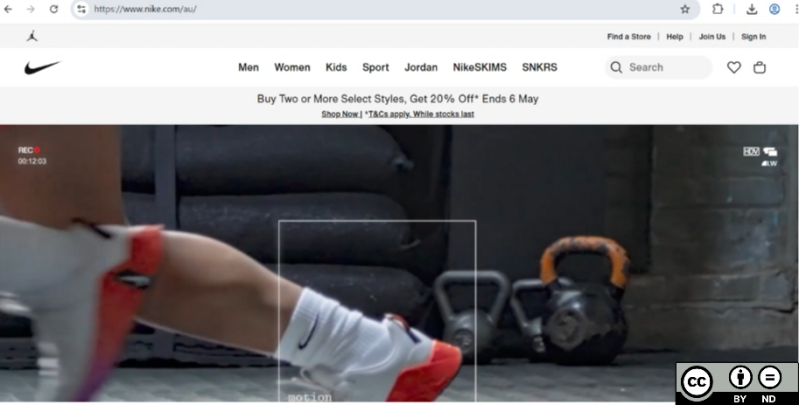

Correct answer: The first one
- Look at the logo and spelling included in the online platform. Fake websites often include spelling mistakes which unfortunately readers sometimes do not realise. An extra or missing letter is sometimes all that is needed to realise that the website in front of you is fake.
Example 2:
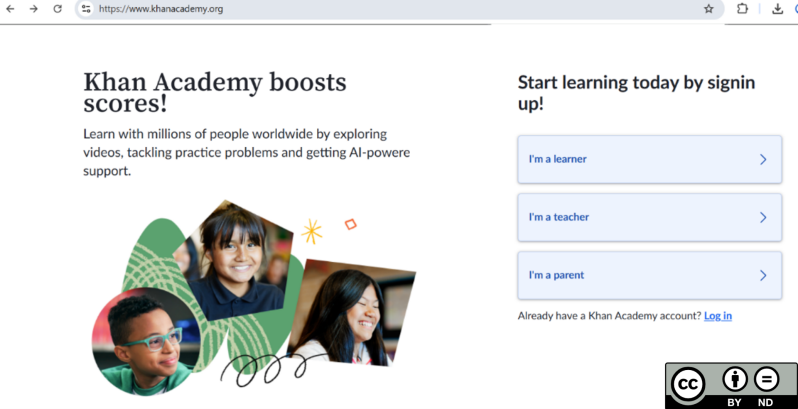
Do you think this is a real website or a fake one? Look carefully.
Correct answer: Fake
Spelling mistakes:
- AI-powere instead of AI-powered
- signin instead of signing
Important tips to keep in mind
- Think about the authors. Is the author someone who has written previous publications, or is he just someone who posted something on Facebook to warn—or rather, frighten—others? The former author's news is undoubtedly more likely to be reliable than the latter's.
- Lastly, check with other sources. If you think that the news or information you are reading only is not really convincing, try looking for other websites/news outlets so see whether they are saying the same thing. Reading just one more blog post, article, or journal won't hurt you. By doing so, you can avoid falling for misinformation by gaining more clarity.
Musgrove, A. T., Powers, J. R., Rebar, L. C., & Musgrove, G. J. (2018). Real or fake? Resources for teaching college students how to identify fake news. College & Undergraduate Libraries, 25(3), 243–260. https://doi.org/10.1080/10691316.2018.1480444
Ruiz, J. M. G. (2018). (2018). Discerning disinformation through design: Exploring fake news website design patterns. Paper presented at the The Asian Conference on Media, Communication & Film. https://papers.iafor.org/wp-content/uploads/papers/mediasia2018/MediAsia2018_42587.pdf
Use of GenAI in this blog: It was mostly utilized to create a catchy title for the blog, making it more appealing to the readers. Unless otherwise stated, the other news is the author's exclusive source of information.
Add comment
Comments